
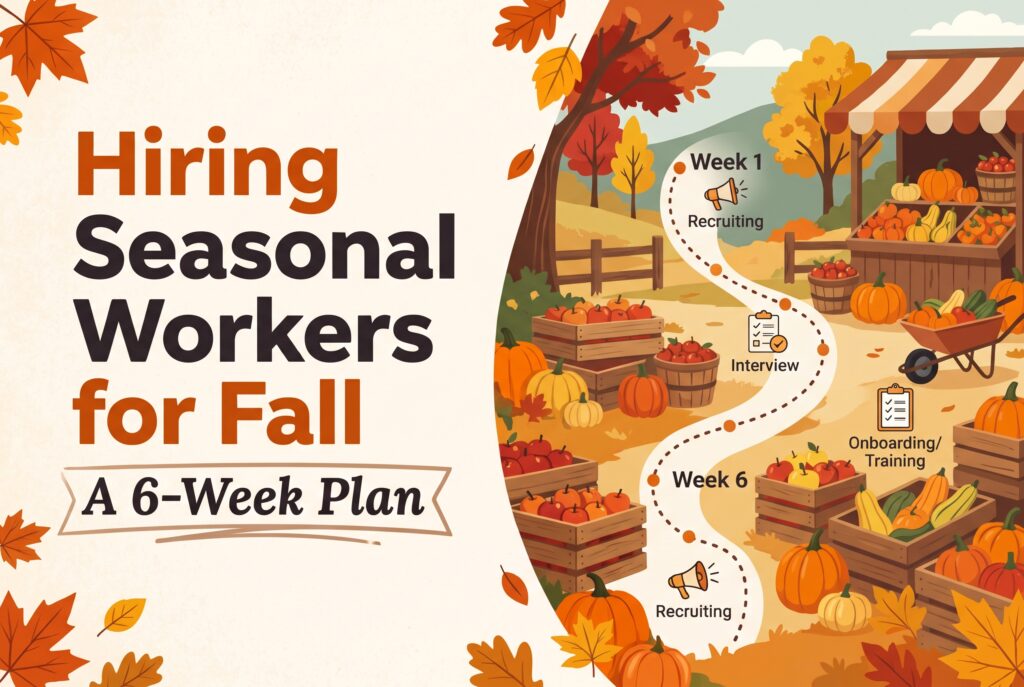


Knowing how to hire seasonal employees can keep a fall rush from putting too much strain on your crew. For instance, HVAC and appliance repair firms need more help for heating checks before winter. At the same time, landscaping firms face leaf removal, aeration, and overseeding work before the first frost. Because of this, you will need plenty of time to hire your seasonal staff. This six-week plan helps you move from a staffing need to a worker’s first clock in.
Many companies advise homeowners to book heating system checkups in the fall, before contractors get busy in winter. For that reason, the call load may rise for HVAC firms during a short span. Also, landscaping firms may have many jobs tied to weather and frost dates. Overall, a six-week lead gives you time to hire, train, and test your plan.
Before Week 6: Decide If Seasonal Hiring Makes Sense
Before you learn how to hire seasonal employees, check that extra labor will solve a real need. First, review last fall’s hours, open jobs, missed calls, and overtime. Next, compare those facts with signed work and likely renewals for this year. In this case, hire when the work can cover wages, payroll taxes, gear, training, and added office time.
Use this quick check before you approve a role:
- Count the jobs you must finish during the fall rush.
- Estimate the labor hours for each job or service call.
- Subtract the hours your current team can work safely.
- Hire only for the gap you can support with real demand.
Week 6: Build the Role and Set the Dates
The first step in how to hire seasonal employees is to define the job in plain terms. In this case, name the tasks, work sites, shift times, pay range, and physical needs. Then, mark the first day, likely last day, and any chance of added work. As a next step, clear dates help applicants decide if the job fits their own plans.
Next, separate the skills an applicant must already have from those your company can teach. For example, a driving position may require a valid license and a clean driving record. An experienced crew member may also need to know how to use equipment safely. However, new hires can learn your routes, clock in process, and job note system during training.
Write down these your needs for your team:
- The main work the person will do each day.
- What days and hours you expect them to work.
- The skills, license, or record they must have.
- The skills your team can teach in one or two weeks.
Week 5: Write the Job Post and Recruit Seasonal Employees
When learning how to hire seasonal employees, start with a job post written for the trade and the season. Use a clear title such as fall cleanup crew member or seasonal HVAC helper. Include the pay, service area, start date, expected end date, and normal work hours.
Help applicants understand what a typical workday will involve. For example, a landscaping post may include leaf removal, aeration, loading equipment, and cleaning job sites. An appliance repair post may list warehouse work, parts delivery, supply runs, or helping a trained technician. However, make it clear that seasonal workers cannot perform licensed work without the required credentials.
Share the job post where local trade workers are likely to see it:
- Ask your best workers for referrals.
- Contact trade schools and local work programs.
- Post in local job groups and on community boards.
- Contact past seasonal employees who left on good terms.
Week 4: Screen Applications and Build Your Short List
Employers planning how to hire seasonal employees should compare each application with the job requirements set during week six. Remove applicants who lack a required license, cannot work the needed schedule, or live outside your service area. Look for dependable work habits, related experience, and a clear understanding of seasonal employment. Use this review to select a smaller group for brief phone calls.
During the phone screen, confirm the applicant’s start date, availability, pay expectations, and access to reliable transportation. Explain that weather, job volume, or customer needs may cause schedule changes. You should also confirm that the person can handle the physical demands of the position. Clear answers can help you decide who should move forward to an interview.
The 70 30 rule can guide the next part of the screening process. This informal hiring guideline suggests considering applicants who meet about 70 percent of the job requirements. SHRM notes that candidates who match most requirements may still be strong hires when training can close the remaining skill gaps. This approach can keep employers from overlooking dependable applicants who can learn the role.
Finish the week by choosing the applicants you want to interview. Keep notes about each person’s qualifications, availability, and possible training needs. These notes will help you prepare fair interview questions during week three. They will also make it easier to compare candidates after the interviews.
Need an Employee Scheduling App for your Employees?
Week 3: Interview, Check Facts, and Make the Offer
At this point, create a short list and ask each candidate the same main questions. Focus on attendance, outdoor work, safe tool use, and schedule limits. Record each answer on a simple score sheet. A consistent process helps you compare candidates using job facts instead of first impressions.
Using effective interviewing questions can help you identify the strongest candidate for your crew. When reviewing how to hire seasonal employees, ask questions that reveal dependable work habits. A candidate might explain how they worked through poor weather, handled a route change, or responded to an upset customer. Strong answers should show good judgment, clear communication, and a willingness to support the team.
Good reasons to hire someone include safe work habits, honest answers, and availability that fits your schedule. Practical skills matter, but dependability and a willingness to learn also count. A helper with less experience may be a better choice than a skilled worker with a history of poor attendance. Before making an offer, verify work history, licenses, and driving records when the position requires them.
Once you select a candidate, provide a written offer with the pay, dates, hours, supervisor, and work location. Do not suggest that the position may become permanent unless that option truly exists. Clear terms help prevent confusion when the season ends
Week 2: Finish Forms and Plan Safe Training
The next part of how to hire seasonal employees covers the same basic forms used for other employees. First, each paid hire must complete Form I-9, and the employer must review acceptable documents. From there, collect tax forms, payroll details, emergency contacts, and signed work rules. In addition, check state and local steps that may apply to new hires.
Safety training must match the real job, equipment, and work site. In fact, OSHA says host firms and staffing agencies share safety duties for staff supplied by an agency. In this case, the host firm should give training tied to its own hazards and equipment. So, put those duties in the agency contract so each side knows its part when hiring temporary workers.
First, plan short lessons for safe lifting, tools, driving, heat, cold, and client sites. Next, pair each new hire with a crew lead who can watch the first tasks. Afterward, keep a signed record of each lesson and any skill check. Above all, never treat short term workers as if safety rules matter less for them.
Week 1: Set Up Schedules and Time Tracking
Week one is where many guides on how to hire seasonal employees stop too soon. A new worker may be ready to work but still lack a shift, site address, or clock in plan. Now, build the first employee schedule and add job notes before the start date. Share who the worker calls when weather or a client changes the day.
This guide to managing several job sites explains how one shared schedule can keep field crews aligned. In addition, it can help you plan routes, site leads, and backup time for the first week. Use it as a final check before you publish the new worker’s shifts. After that, confirm that the employee can open every job note and map.
A mobile time tracking app from ezClocker can place schedules, job details, and time records in one system. Workers can clock in from a phone, and managers can review hours without collecting paper cards. The GPS record shows where a clock in or clock out took place. Explain what the app records and how your firm uses that data.
First Shift: Test the Plan Before the Rush
When the employee arrives for the first shift, provide one clear reporting location and name the person they should meet. Review the day’s assignments, break times, safety steps, and clock in rules. Before work begins, ask the employee to test the time clock and open the schedule. Resolve any phone or access problems before the crew leaves the shop.
Limit the first day to a few main tasks so the employee can learn each one correctly. Ask the crew lead to observe the work and offer clear, helpful feedback. A brief check during the middle of the shift can uncover questions or training gaps. Before the employee leaves, review the timecard and confirm the next scheduled shift.
Discuss time off procedures before the busy season begins. A clear process for managing employee time off requestshelps small teams avoid sudden scheduling gaps. Explain how much notice workers should give, where they should submit requests, and how decisions will be made. Add the policy to the employee’s start packet and show them exactly where requests should go. Clear rules make the process easier for both workers and managers.
What Field Service Case Studies Show
Hiring seasonal employees creates an immediate timekeeping challenge, especially when crews report directly to job sites. However, with a timekeeping app like ezClocker, hiring and managing seasonal worker’s times and schedules make it easy.
Matthew Brown owns Matthew’s Grounds Maintenance. As his firm grew, manual time entry took him away from bids and clients. After his office manager set up ezClocker, new workers could join through a simple email link. The firm saved 10 to 15 hours each month and paid workers to the minute.
Pete Ciotti owns Ciotti Yard Maintenance. His paper notes listed job sites, start times, end times, and work types. Over time, missing notes and errors made payroll harder. Mobile time records helped him send hours to his accountant in minutes.
Appliance repair business owner Kara Hale, from Hale Appliance Services uses mobile clock ins and GPS records to see when and where field technicians started work. Missed punches could be corrected easily, and payroll reporting took approximately 15 minutes.
A straightforward system like ezClocker helps employers establish clear expectations for seasonal hires beginning with their first shift.
How Long Can You Keep a Seasonal Employee?
Employers deciding how to hire seasonal employees should set a clear expected end date. No single federal time limit applies to every seasonal job. The proper length depends on the work, written terms, and laws that apply to your business. If a temporary need becomes ongoing, review the position instead of repeatedly extending the end date.
For health coverage rules, the IRS uses a narrower meaning. It says a seasonal employee holds a role with customary yearly work of six months or less. The job should begin in about the same part of each year. This rule does not create a general six-month firing deadline.
Federal wage law does not set one daily or weekly hour cap for workers age 16 and older. Still, wage, overtime, child labor, leave, and record rules may apply. State law or a benefit plan may use its own test for seasonal status. For that reason, ask a local labor adviser to review a role that lasts longer than planned.
Final Thought for How to Hire Seasonal Employees
Knowing how to hire seasonal employees is easier when each week has one goal. Confirm your staffing needs, hire and train workers, then test your schedule and time clock. Use the seasonal hiring checklist to track each task and deadline. Starting early gives new workers clear directions before the fall rush begins.
If you are reviewing how to hire seasonal employees this month, begin with your past schedules and booked work. From there, set a six week start date and finish one group of tasks each week. Test the process with one new hire before adding the full crew. That small trial can show where your job post, training, or first schedule needs work.